
Conservation Acceleration Fund Mid-Year Update
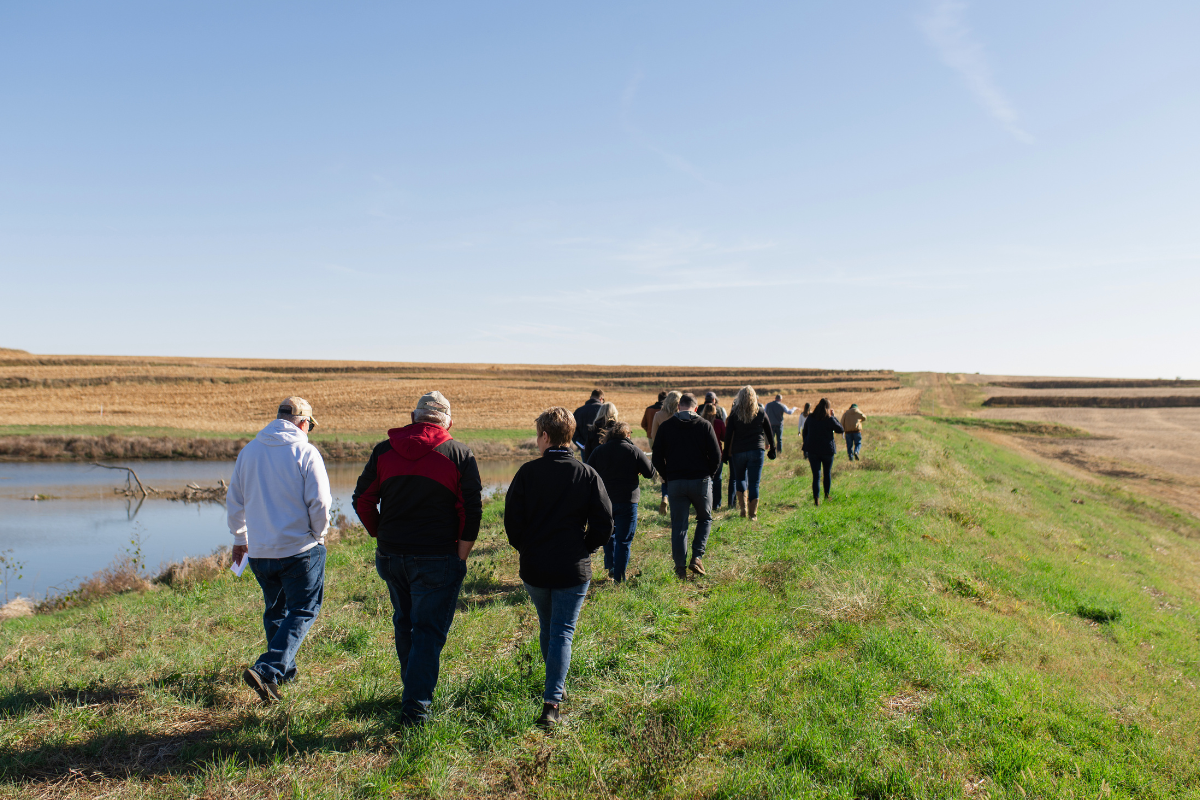
The end of June is just around the corner, with the midway point of 2026 also looming on the horizon. We started the year full of relentless optimism and our signature “happy disruptors” attitude, ready to reach new heights. As we look back on the first half of 2026, we’re proud of what has been accomplished. We’re also looking ahead to the future, acknowledging that more must be done. Moving the needle on water quality will take all of us — left and right, public and private, conservation and agriculture — working together for lasting change.
The Conservation Acceleration Fund (CAF) was developed in 2023 to do just that. Bringing together unlikely bedfellows in “radical collaboration,” the CAF has activated more than 100 water quality projects across Iowa in the last three years. And we’re just getting started.
Below are seven CAF projects taking place in 2026.
Spring Creek Wetland
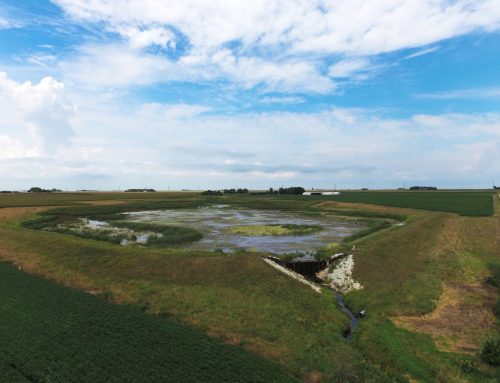
The Spring Creek Wetland, located in Polk County, will restore a wetland to bring renewed water quality benefits to the area. Utilizing a new stop log diversion structure, this wetland will divert a large watershed into this vast wetland area. The second of its kind in Central Iowa, the Spring Creek Wetland will create a seasonal wetland pool of 200-400 acres after diverting water from 18,000 drainage acres. In its lifetime this wetland will reduce almost 10million pounds of nitrates in a 50-year lifespan, with an annual reduction of 160, 200 pounds.
This project is made possible by partnerships with the Iowa Department of Agriculture and Land Stewardship (IDALS), Iowa Department of Natural Resources (IDNR), the Army Corp of Engineers, city and county governments, and the Great Outdoors Foundation (GOF).
Pastour Wetland
Pastour Wetland, located near Pleasant Hill, is part of Polk County’s Wetland Wave Program. Launched in 2022, this program batches the engineering and installations of wetlands across Iowa’s landscape, helping improve water quality, minimize flooding, and increase wildlife habitat. Pastour Wetland will treat 151 acres of agriculture land, annually reducing 1,661 pounds of nitrates. In its lifetime it will mitigate 83,050 pounds of nitrates.
This project is in partnership with IDALS, city and county governments, the Army Corps of Engineers, and GOF.
Mullinax Oxbow
The Mullinax Oxbow restoration project will improve water quality in Beaver Creek located in Boone County, Iowa. Oxbows, a type of wetland, are sections of streams, creeks, or rivers that have become separated from the rest of the water source. They are smaller than typical wetlands, but provide multiple benefits like habitat and flood mitigation. This oxbow will mitigate 2,750 pounds of nitrates in its lifetime, pulling from 5 acres of agricultural drainage.
The Mullinax Oxbow is made possible by IDALS, Boone County, a dedicated private landowner, and GOF.
Cambridge Tract
Located in Story County, Iowa, the Cambridge Tract project will restore multiple acres of prairies, wetlands, and oxbows on the South Skunk River. The land, currently row cropped, has ample opportunity for water quality improvements and nutrient management strategies. Once projects have been completed, the wetland areas will have an annual nitrate reduction of 15,400 pounds and a lifetime reduction of over 700,000 pounds.
We are thankful for our project partners at Iowa Soybean Association, National Fish and Wildlife Foundation, Story County Conservation, and GOF.
Cattle and Conservation Working Lands Program
Farmers often want to be a part of the conservation solution — they just need the help and resources to do so. The Cattle and Conservation Working Lands program offers support, helping farmers convert non-productive row crop land into perennial hay and pasture. Over 5,000 acres will be transitioned during this round of grant funding, bringing incredible improvements to water quality and soil health within the Missouri River Watershed.
We are thankful for the IDALS and Google for their generous program support.
Conservation Agronomy Education Program
Conservation Agronomists (CAs) are crucial to both agriculture and conservation, providing farmers with profitable insights that also help protect and preserve our land. Iowa has a shortage of these professionals, something this on-ramp pilot program seeks to address. In partnership with the Iowa Soybean Association, this program will provide at least 20 CAs with the training, knowledge, and skills needed to improve conservation efforts across Iowa’s agriculture landscape.
In addition to support from the CAF, this on-ramp program will be funded by Microsoft, with training targeted in Dallas, Madison, Polk and Washington counties.
North Polk School Wetland and Outdoor Classroom
The North Polk School Wetland and Outdoor Classroom project, located in Alleman, Iowa, will bring conservation directly to the next generation. The outdoor classroom area will allow K-12 students to foster an appreciation and understanding of the outdoors, both through time spent in nature and in hands-on learning. Students will be immersed in conservation practices taking place in the Fourmile Creek Watershed, a priority watershed for the Des Moines Metro area. Once complete, the area will also have a prairie, wetland, several stream practices, and a limestone block water access point.
Funding for this project has been generously provided by Casey’s, North Polk Community Schools, Polk Soil and Water Conservation District, Polk County, Iowa Environmental Council, and GOF.
Now more than ever there is an appetite and energy to find conservation solutions that work for our state. Thank you to our CAF supporters, investors, and project partners for joining us on our mission. The time to stand divided is past us. The time to join together is here.
We truly could not do this without you.