
2026 Conservation Acceleration Fund (CAF) Projects: A Look Ahead
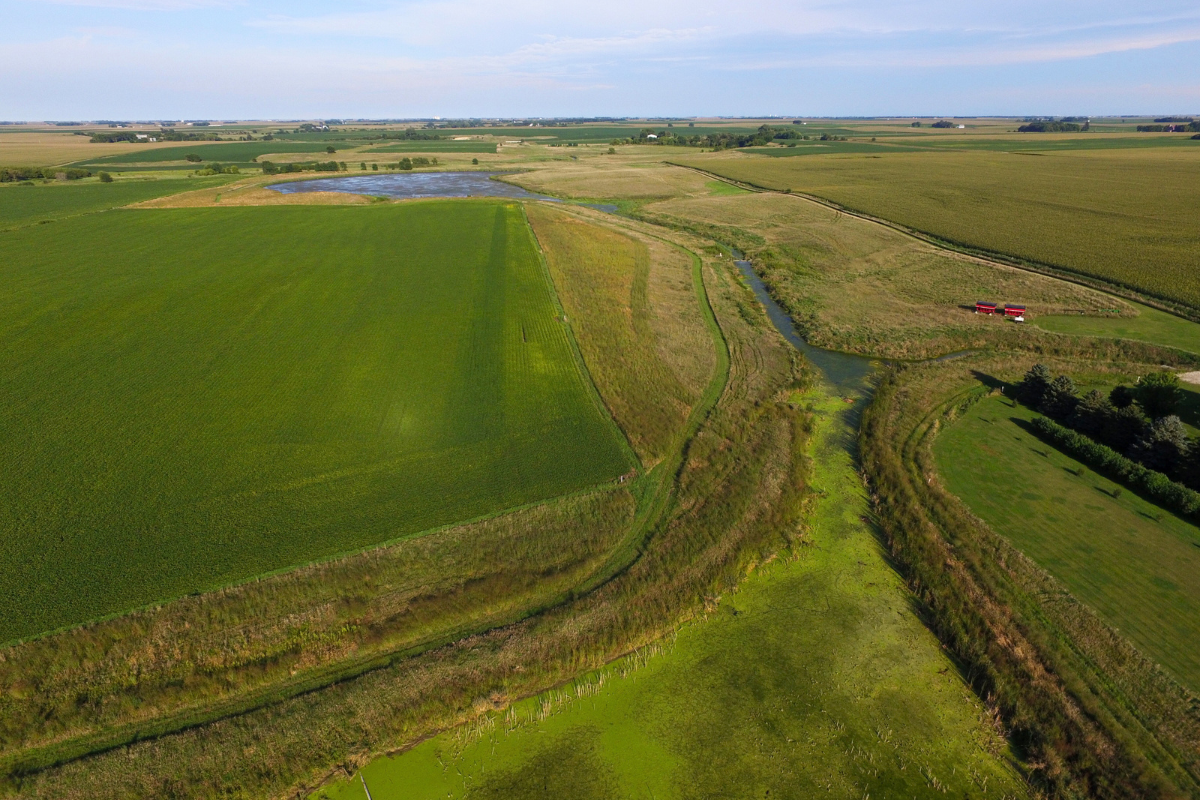
The Conservation Acceleration Fund (CAF) was established in 2023 to accelerate the pace and progress of our region’s conservation. Historically, a lack of funding and red tape kept many critical conservation projects from implementation. The CAF has made significant progress towards removing these barriers, and as a result has activated 105 water quality projects across Iowa in the past two years alone.
We have our sights set on big goals for 2026 and are excited about all we can accomplish together. Below is a look ahead at six CAF projects taking place this year.
Legacy Woods: Stormwater Wetlands
The Legacy Woods Nature Sanctuary (LWNS) in West Des Moines, Iowa, is an exciting area of revitalization for Polk County. Situated on 28 acres along the northern edge of the Racoon River Valley, the land was purchased in 2023 by the City of West Des Moines. Initially only including plans for an arboretum, Legacy Woods plans have since transformed to include improvements to many aspects of the land and water. Taking a comprehensive approach to stormwater management by utilizing a treatment train, the Legacy Woods Stormwater Wetlands will positively impact the Racoon River, treating 11 acres of drainage runoff. This approach routes stormwater through multiple connected practices, providing maximum water quality benefits. Practices will include a grassed swale, bioretention cells, native landscaping, extended dry detention, and soil quality restoration. Alongside the CAF, this project is made possible by generous support from Microsoft, the Iowa Department of Agriculture and Land Stewardship (IDALS), local government, nonprofit organizations, charitable foundations, and private donors.
Chichaqua Wetlands
The Chichaqua Bottoms Greenbelt, located in the northeast corner of Polk County, is more than 8,388 acres of natural landscape. This wetland restoration project will utilize pumps to draw water from agricultural drainage ditches, rehydrating disconnected wetlands in one of Central Iowa’s largest parks. These two wetlands will directly improve the South Skunk River Watershed, treating a 40-acre runoff to annually reduce 356 pounds of nitrogen, with a 17,800-pound total lifetime reduction. A two-staged ditch will also be installed for demonstration purposes. Two-staged ditches include a low-flow channel with bench-like floodplains flanking each side, helping slow water and reduce erosion during high flows. This project is a partnership between IDALS, Polk County, and GOF.
City of Dunlap Green Infrastructure Projects
Located in Harrison County, Iowa, the City of Dunlap will implement multiple green infrastructure improvements with partial funding from the CAF. A multi-project treatment train will route water through several structures, resulting in maximum water quality improvements to 474 acres of runoff. Structure installs include two bioretention cells and a wetland with a forebay. Pond improvements will help restore capacity while improving sediment and nutrient capture. Additional features to the water structures will include fish and turtle habitat structures, and boulders serving as platforms for fishing access. These projects annually reduce 4,219 pounds of nitrogen, reaching a total of 210, 930 pounds in their lifetime. These projects are a joint effort between GOF, the City of Dunlap, IDALS, and Google.
Terrace Hills Wetland
This highly visible wetland will be constructed on Terrace Hills Golf Course, located in Altoona, Iowa. The project will feature a state-of-the-art pump system, public trails, prairie conversions, and water trails access. Directly affecting Mud Creek and the Des Moines River, the wetlands will treat 10,496 acres of runoff, annually reducing 93,414 pounds of nitrogen and 4,670,720 pounds in its lifetime. This project is made possible by GOF, IDALS, local government, and the City of Altoona.
Harding Wetland
Polk County is partnering with Camp Dodge, home of the Iowa National Guard, to install critical water quality practices on acquired conservation land. The project will construct a large, pumped wetland to intentionally direct water to be treated along Little Beaver Creek. Beaver Creek is a priority watershed of the Des Moines metro area, making the improvements to this water even more critical. The wetland will treat 7,424 acres of runoff, mitigating 66,074 pounds of nitrate annually with a lifetime total of 3,303,680 pounds. This project is made possible by GOF, IDALS, local government, and Camp Dodge.
City of Cedar Rapids Research and Development Project
The City of Cedar Rapids is leading the Growing Resilience in the Middle Cedar Watershed (GR-MCW) Initiative. This project will work directly with farmers to identify locations to implement, test, and model innovative natural infrastructure projects. Projects include grassed waterways and modified blind inlets and will be monitored for a three-year period. The information collected during the monitoring period will have a two-fold benefit; it will inform the development of a standard design for future practices and provide an estimate for sediment and nitrate reduction for similar projects.
These six projects provide just a glimpse into the impact the CAF will have this year, with 11 total projects to be completed in 2026. We are so grateful to our partners and board of directors for entrusting us to do this great work — we could not do it without you.