
Water Quality Projects 101
Water is one of our most critical resources, touching nearly every aspect of our lives — the food we eat, the spaces we recreate, and even the places we choose to call home. When water quality is threatened, it doesn’t just affect our health. It affects our environment, economy, and overall quality of life.
National Water Quality month is a time to acknowledge the incredible role water plays in our lives, and to celebrate what is being done to safeguard it. In this month’s blog, we’re highlighting four types of water quality projects that are bringing lasting water quality improvements to our region and beyond.
Wetlands
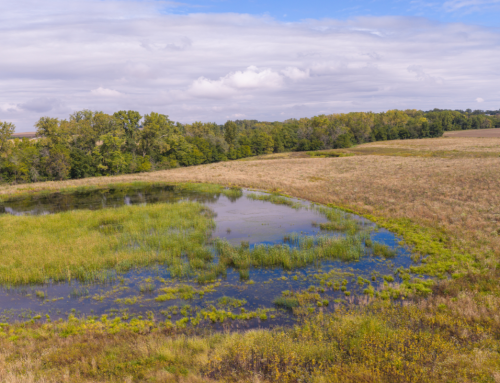
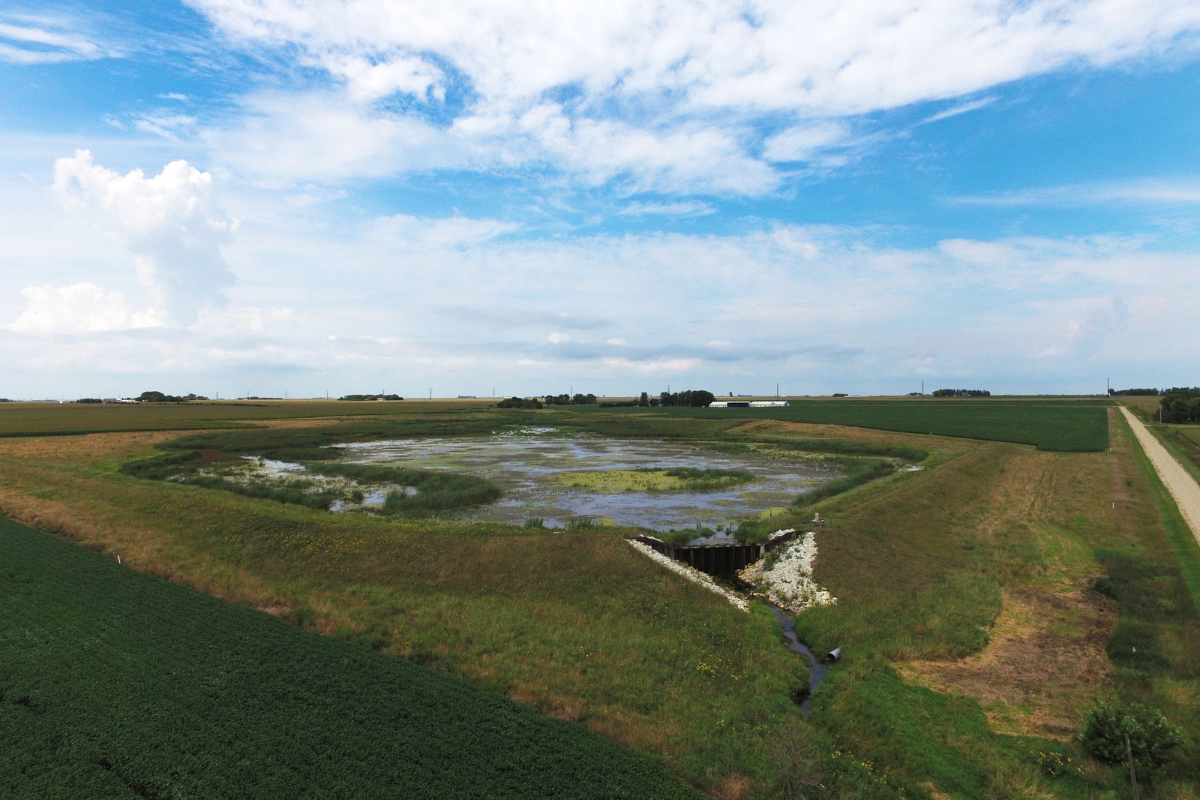
Wetlands are areas where water pools either at or near land surface. Their water levels can vary, depending both on wetland type and weather patterns. The U.S. Environmental Protection Agency (EPA) classifies wetlands into four main types: marshes, swamps, bogs, and fens. It is estimated that prior to European settlement, wetlands covered around 11-25% of Iowa’s land. Today, almost 95% of the original wetlands have been drained. Wetlands are often revered as the ‘gold standard’ for water quality projects, due to their large number of benefits.
Flooding-
Wetlands are incredible resources in flood management. As water levels rise, they provide a natural place for excess water to collect. This is especially important in urban areas, where impervious surfaces like concrete, asphalt, buildings, and other structures block water from naturally infiltrating into the ground. By holding and slowly releasing water, wetlands reduce strain on streets, storm drains, sewers, and more that might otherwise become overwhelmed. According to the U.S. EPA, an acre of wetland can store 1-1.5 million gallons of floodwater. The roots and vegetation present in wetlands also help flood mitigation, acting as nature’s ‘breaks’ as water flows through them, absorbing water for their own growth.
Water filtration and treatment –
When water flows from agricultural and urban areas into wetlands, it is often full of pollutants, like nutrients, toxins, and sediment. These contaminants can be treated through physical settling in the soil, biological uptake by plants, and chemical breakdown by microbes. These natural processes work to trap sediment, absorb excess nutrients, and transform toxic compounds.
Through support from the Conservation Acceleration Fund (CAF), three wetlands were constructed on Corteva’s corporate campus in Johnston, Iowa. These wetlands will annually reduce 2,109 pounds of nitrates, with a lifetime reduction of 105,465 pounds. We’re incredibly thankful for our project partners at Polk County, Boone Soil and Water Conservation District (SWCD), Polk SWCD, and Beaver Creek Watershed Management Authority.
Edge of Field Practices
Aptly named, these water quality projects sit at the edge of agriculture fields, helping capture critical nutrients found in runoff without affecting farm production.
Saturated Buffers
Water leaving farmland typically flows through tile lines straight into a ditch or stream, carrying excess nutrients with it. A saturated buffer is a buffer area of perennial vegetation that is saturated with farm runoff prior to it reaching waterways. A water control structure placed amid the vegetation is connected to the field tile lines, and when water drains from the field it is diverted down lateral distribution pipes in the buffer. Water in these pipes escapes into the vegetation buffer, where living roots and soil absorb the water and nutrients. The Iowa Nutrient Reduction Strategy reports that saturated buffers have the potential to remove 50% of nitrates from water diverted into the buffer.
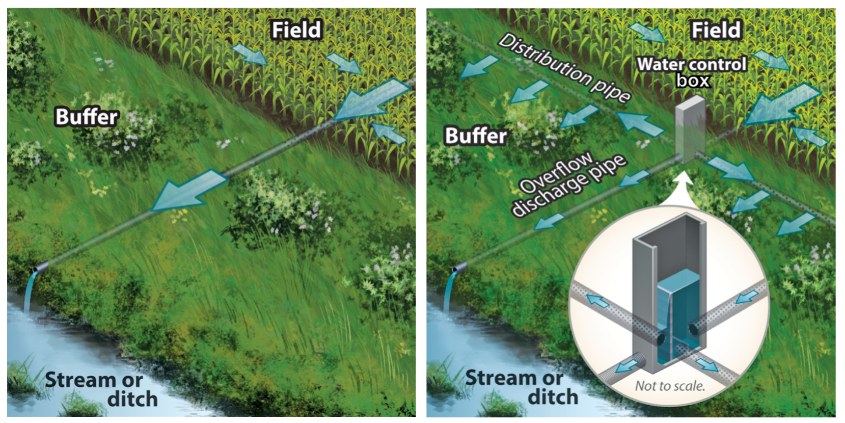
Image courtesy of Frankenburger et al., Unpublished.
Bioreactors
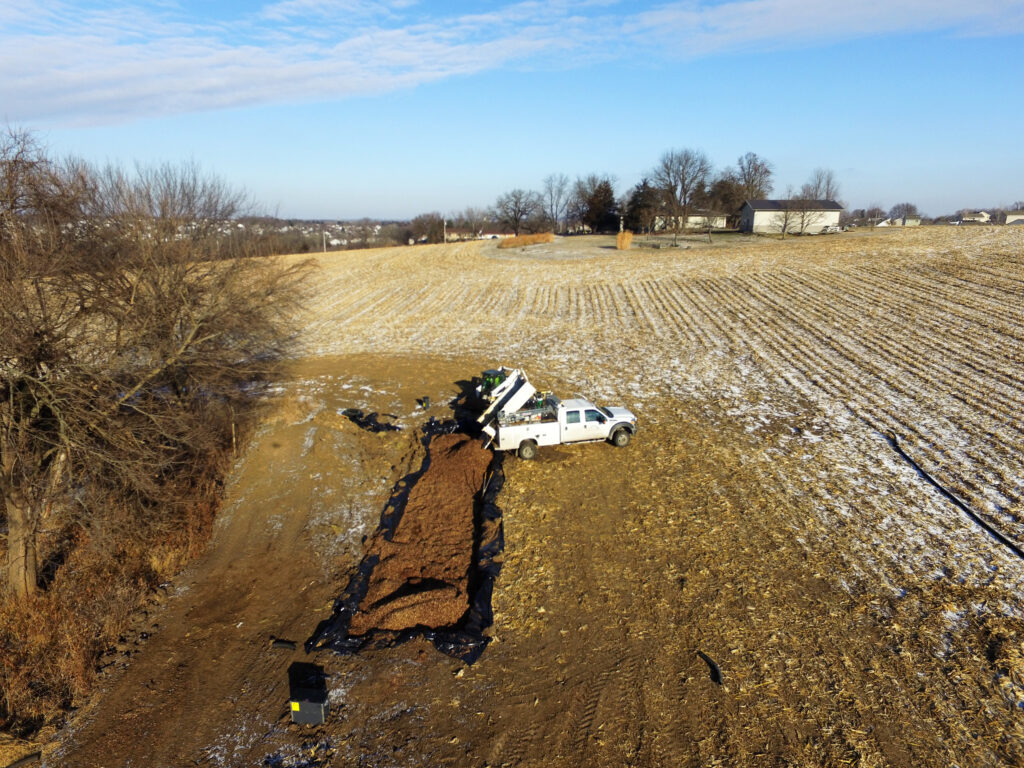
A bioreactor is a large pit filled with woodchips that is placed at the edge of a farm field. The water in tile lines is diverted into the pit where microorganisms, or bacteria, use the wood as a carbon source to consume the nitrates in the water, transforming it into harmless nitrogen gas. Bioreactors have a lifespan of 10-15 years, and then woodchips must be replaced to continue providing water quality benefits. The Iowa Nutrient Reduction Strategy estimates that on average, bioreactors remove 43% of nitrates from the water moving through it.
Both saturated buffers and bioreactors are water quality projects being implemented through Batch & Build programs across the Midwest, including at Heartland Co-op. Working with the Iowa Seed Association, Heartland Co-op has developed a Conservation Drainage Program to bring these critical water quality practices to more farmland in Eastern Iowa.
SWCS/IDALS Photo by Lynn Betts
Streambank Stabilizations
Streambank erosion is caused by water, rocks, and debris wearing away at the banks of a stream or river. It is problematic for several reasons, including loss of land, damaged aquatic habitat, increased downstream flooding risk, and pollutants added into waterways. Phosphorus, which binds to soil particles, enters water sources during streambank erosion. This can cause excessive algae and plant growth and lead to decreased water quality.
There are many ways to stabilize a streambank, but most include a combination of vegetation, rocks, and wood to rehabilitate the bank. Vegetation is added so a new root system can take hold and strengthen the soil long-term. Some stabilizations include restoring streams to a ‘meandering’ shape, where steams move in an S shape, as opposed to a straightened path that increases water velocity and erosion.
In 2024, the CAF provided support to stabilize one of the most actively eroding stream sections in the county. Indian Creek, located in Polk County, was on pace to significantly disrupt a family farming operation and take out a nearby county road if left untreated. Thanks to support from the Natural Resources Conservation Service and Polk County, this stream section has been stabilized and restored to proper condition.
The water quality challenges ahead of us are unprecedented, and will require an unprecedented response. We’re moving forward with bolder ideas, more radical collaboration, and relentless optimism. Thank you to everyone who has joined in this work so far — we could not do it without you.